
Who Is Liable in Multi-Vehicle Chain Reaction Accidents?
Harker Injury Law is proud to serve Escondido, National City, Riverside, and surrounding communities with compassionate, experienced personal injury representation. Multi-vehicle chain reaction accidents are some of the most stressful and confusing situations drivers can face, especially when multiple cars, injuries, and insurance companies are involved.
After a crash involving several vehicles, injured individuals are often left asking the same question: who is actually responsible? Determining liability in these cases is not always straightforward, and the answer can directly impact your ability to recover compensation and move forward.
What You Need to Know About Chain Reaction Accidents
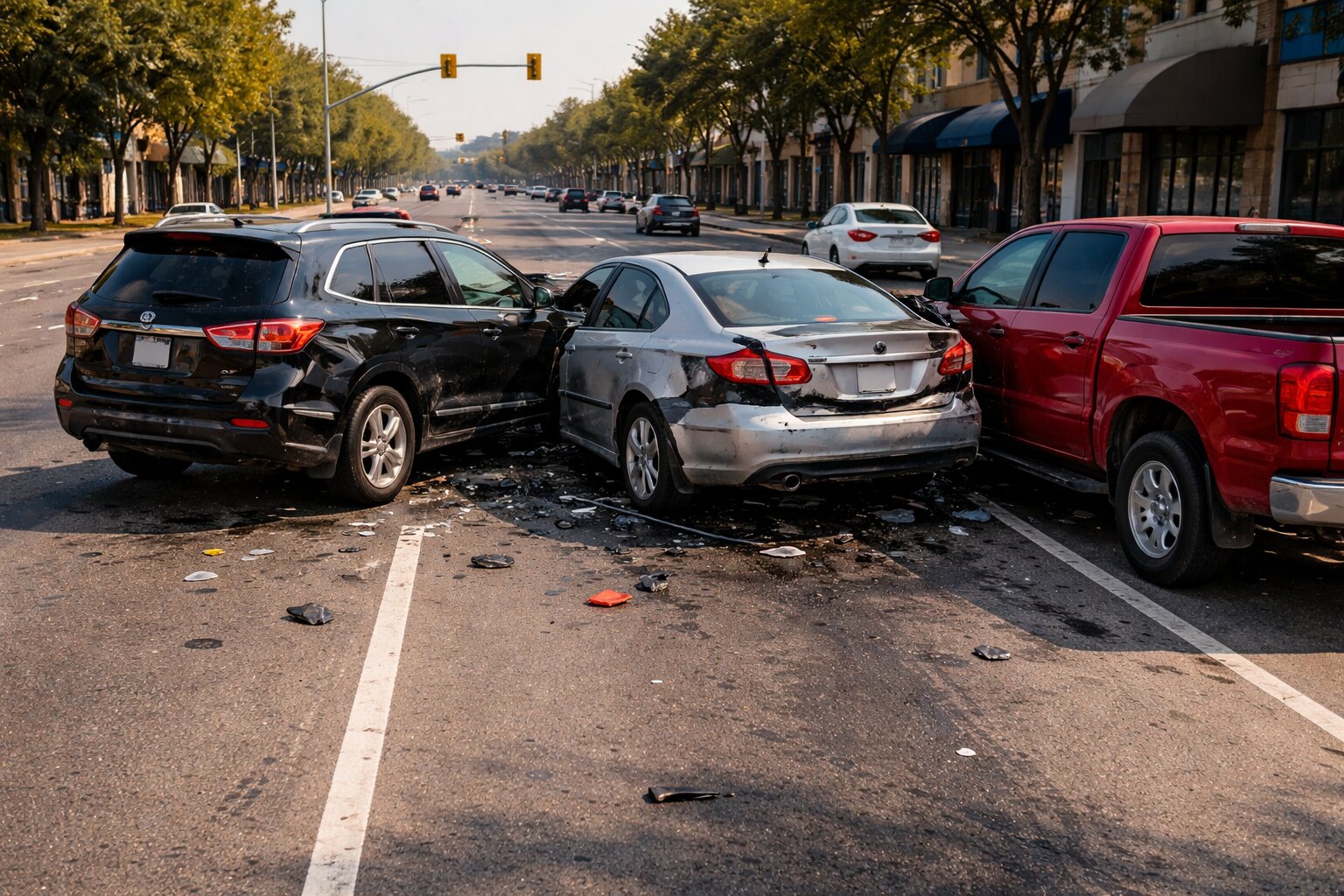
A chain reaction accident, sometimes called a multi-vehicle pileup, occurs when one initial impact triggers a series of collisions involving multiple vehicles. These accidents are common on high-traffic roads like I-15, where sudden stops or poor visibility can quickly escalate into serious crashes.
In many cases, the first collision sets off a sequence that leads to multiple injuries and significant damage.
- Initial Impact: One driver’s actions start the chain of events
- Secondary Collisions: Additional vehicles become involved as the crash spreads
- Multiple Points of Contact: Each vehicle may be hit more than once
These accidents often involve car accidents, truck accidents, and even motorcycle accidents, making them especially dangerous. The more vehicles involved, the more complex the liability analysis becomes.
How Is Fault Determined in Multi-Vehicle Accidents?
Determining liability requires a careful review of how the accident unfolded. In California, fault is based on negligence, meaning each driver’s actions are evaluated to see if they contributed to the crash.
Key factors include:
- Following Distance: Drivers are expected to maintain safe space between vehicles
- Speed: Excessive speed reduces reaction time
- Driver Attention: Distracted driving can lead to delayed braking
- Road Conditions: Weather and traffic patterns may play a role
In some cases, more than one driver may be responsible. California follows a comparative fault system, meaning liability can be shared among multiple parties.
This means even if one driver started the accident, others may still bear partial responsibility if their actions contributed to the outcome.
Common Scenarios in Chain Reaction Crashes
Every chain reaction accident is different, but certain patterns appear frequently in Southern California.
- Rear-End Collisions: One driver fails to stop in time, causing a domino effect
- Sudden Stops on Highways: Traffic slows quickly, leading to multiple impacts
- Lane Change Accidents: A driver merges improperly, triggering collisions
- Truck Involvement: Large vehicles require longer stopping distances
Common Challenges People Face After Multi-Vehicle Accidents
These cases often involve more complications than a typical accident. Injured individuals may face multiple insurance companies and conflicting accounts of what happened.
- Disputed Liability: Drivers may blame each other
- Multiple Insurance Policies: Claims may involve several carriers
- Inconsistent Statements: Witness accounts may vary
- Delayed Investigations: More vehicles mean more complexity
Without clear evidence, these cases can become overwhelming. Insurance companies may attempt to shift blame or minimize payouts, making it harder for injured individuals to recover fair compensation.
If you’re dealing with a multi-vehicle accident, call Harker Injury Law at 760-INJURED for a free consultation. We’re here to help you understand your options and move forward with clarity.
How Evidence Helps Establish Liability
Strong evidence is essential in determining fault in chain reaction accidents. The more information available, the clearer the picture becomes.
- Dashcam Footage: Captures the sequence of events
- Police Reports: Provide initial findings and observations
- Witness Statements: Offer additional perspectives
- Vehicle Damage Analysis: Helps determine impact order
For example, damage patterns can show whether a vehicle was pushed into another or struck independently. This level of detail is often necessary when multiple drivers are involved.
In serious cases, including catastrophic injury or wrongful death, this evidence becomes even more important.
How Insurance Companies Handle These Claims
Insurance companies carefully review chain reaction accidents, often looking for ways to reduce their liability. This can lead to complicated negotiations and disputes.
- Fault Allocation: Insurers may assign partial blame to multiple drivers
- Claim Delays: Investigations may take longer due to complexity
- Settlement Pressure: Early offers may not reflect the full extent of damages
- Disputes Over Injuries: Insurers may question the cause or severity
Because California allows shared fault, insurance companies may attempt to reduce payouts by assigning partial responsibility to injured individuals.
Don’t wait—call 760-INJURED and speak with Harker Injury Law about your case. Early guidance can help protect your claim from the beginning.
Mistakes to Avoid After a Chain Reaction Accident
After a multi-vehicle accident, certain mistakes can make the situation more difficult.
- Admitting Fault Too Early: Liability may not be clear right away
- Failing to Gather Evidence: Important details may be lost
- Delaying Medical Care: Injuries should be documented promptly
- Speaking to Insurers Without Guidance: Statements can affect your claim
Taking the right steps early can help preserve your rights and strengthen your case.
How Harker Injury Law Helps You Move Forward
Multi-vehicle accidents require a thoughtful and strategic approach. At Harker Injury Law, we understand how overwhelming these situations can be and work closely with clients to build strong cases.
We focus on:
- Investigating the Accident: Identifying all responsible parties
- Gathering Evidence: Building a clear timeline of events
- Handling Insurance Companies: Managing communication and negotiations
- Pursuing Compensation: Seeking recovery for medical bills, lost income, and more
We treat every client like family and are committed to helping you move forward with confidence and support.
Call Harker Injury Law Today to Protect Your Recovery
If you’ve been injured in a multi-vehicle chain reaction accident, you don’t have to navigate the situation alone. Determining liability can be complex, but the right guidance can make all the difference.
Call Harker Injury Law at 760-INJURED today to schedule your free consultation. Whether you’re recovering at home or still searching for answers, Harker Injury Law is here to provide guidance, strength, and peace of mind. Let’s talk about how we can help you take the next step.